Most RTOs exploring workforce re-engineering for RTOs already know they are under pressure.
To begin with, administrative workloads are increasing. Compliance complexity continues to grow. Leadership teams are carrying heavier operational workloads each year. Meanwhile, labour costs continue to rise while expectations around learner experience and operational responsiveness keep climbing.
As a result, many organisations still respond to these challenges by hiring more people. At first, that response feels logical. However, this approach may not solve the real issue.
Across the vocational education sector, a more important conversation is emerging around workforce redesign for RTOs and how operational structure impacts scalability, productivity, and long-term sustainability.

That is why this topic will be one of the themes Reuben Brennan explores at the upcoming ITEC26 Conference in Brisbane from June 3 to 5, 2026. Instead of focusing solely on recruitment or outsourcing trends, the discussion centres on workforce re-engineering for RTOs and why smarter workforce design is becoming essential for sustainable growth.
Ultimately, many RTOs are focusing on hiring more people when they should be redesigning how work flows across the organisation.
Why Traditional Workforce Models Are Struggling in the RTO Sector
Many RTOs have evolved operationally over time rather than through intentional workforce planning.
As organisations grow, leaders and teams take on additional responsibilities without redesigning how work is distributed. Leaders absorb more operational oversight. Skilled staff inherit administrative work that slowly expands beyond their core function.
Eventually, many RTOs find themselves operating in environments where everyone is doing a little bit of everything. At first, this can feel collaborative. Over time, however, it often creates inefficiency.
Managers become trapped in operational firefighting. High-performing staff lose time to repetitive tasks. Immediate operational demands push strategic work further down the priority list.
The issue is not simply capacity. Leaders need to rethink how teams distribute work across the organisation. This challenge becomes more visible as organisations scale. What worked for a team of 15 employees often breaks down at 50. What worked across one campus becomes difficult across multiple locations, larger student cohorts, or increasingly complex compliance environments.
Many RTOs are now facing:
- Administrative overload
- Slower internal decision-making
- Reduced leadership capacity
- Staff burnout
- Rising operational costs
- Difficulty scaling consistently
In many cases, adding more staff into an inefficient structure simply compounds the issue. Without operational redesign, hiring alone rarely improves productivity. This is why more RTO leaders are now exploring ways to create freedom from low-value tasks across administration, coordination, reporting, scheduling, and back-office operations.
The goal is not simply to reduce workload. It is to protect strategic capability.
What Workforce Re-Engineering for RTOs Actually Means
Many leaders misunderstand workforce re-engineering. It is not generic outsourcing. It is not replacing local teams. And it is not purely a cost-cutting exercise.
At its core, workforce re-engineering is about building a more scalable operational structure. That includes:
- Segmenting tasks more effectively
- Improving role clarity
- Aligning capability with responsibility
- Reducing operational bottlenecks
- Protecting leadership leverage
- Designing scalable support structures
The strongest operational models use alignment as their foundation. High-value employees should spend the majority of their time doing high-value work. However, many RTOs still have experienced leaders and skilled operational staff buried in repetitive administration, scheduling coordination, documentation management, and manual reporting.
Over time, this creates drag across the organisation. Right People, Right Seats is not simply a hiring philosophy. It is an operational principle. When organisations align work more intentionally, productivity improves naturally.
Leadership teams gain strategic bandwidth. Decision-making becomes faster. Workflows become clearer. Teams operate with more consistency. Most importantly, operational growth becomes more sustainable.
Where Many RTOs Lose Operational Momentum

Overloaded Leadership Teams
Many RTO leaders carry operational responsibilities that their original structures were never built to scale.
As organisations grow, executives often become approval bottlenecks while simultaneously managing staffing issues, compliance oversight, operational coordination, and day-to-day problem solving.
The result is reactive leadership.
Operational urgency consumes available time and attention, leaving less room for strategic planning.
Highly Skilled Staff Doing Low-Value Work
One of the most common operational inefficiencies inside growing RTOs is task misalignment.
Repetitive administrative work frequently consumes highly capable staff and limits how much they can use their expertise.
Compliance teams spend excessive time on manual processing. Student services staff become overwhelmed with coordination tasks. Operations leaders spend too much time managing workflow friction.
The challenge is not the work itself. It is who is doing the work.
Scaling Without Operational Redesign
Many organisations attempt to scale by simply adding more people into existing structures.
However, if workflows remain fragmented or unclear, additional headcount often creates greater communication complexity instead of operational efficiency.
Without redesigning how work flows through the organisation, scaling becomes increasingly difficult.
Reactive Hiring Models
Short-term hiring decisions may relieve immediate pressure, but they rarely solve structural inefficiencies.
Over time, organisations can find themselves repeatedly solving the same operational bottlenecks with more recruitment.
That cycle eventually becomes expensive, unsustainable, and operationally limiting.
What Reuben Brennan Will Explore at ITEC26 Conference

At ITEC26 Conference, Reuben Brennan will explore why workforce re-engineering is becoming one of the most important operational conversations facing the RTO sector.
The session will focus on how organisations can rethink traditional workforce structures to improve scalability, operational efficiency, and leadership capacity.
Discussion areas will include:
- Sustainable workforce scaling
- Operational redesign for growing RTOs
- Offshore workforce integration
- Smarter operational support structures
- Leadership leverage and workload protection
- Building scalable administrative capacity
Importantly, the session is not about replacing local expertise.
It is about creating operational structures that allow local teams to focus on strategic, high-impact work. Reuben’s session will challenge conventional assumptions about growth, staffing, and operational efficiency in the RTO sector.
The goal is not to reveal a rigid framework or one-size-fits-all methodology. Instead, the session will encourage RTO leaders to rethink how they structure work across their organisations and what operational scalability really requires.
Why This Conversation Matters Now
The RTO sector is entering a period where operational efficiency is becoming a competitive differentiator. Workforce shortages continue to affect recruitment pipelines. Compliance complexity is increasing. Student expectations around responsiveness and service quality continue to rise.
At the same time, many organisations are operating with workforce structures designed for a much smaller scale. This creates growing operational pressure. RTOs that redesign workforce structures strategically will likely outperform organisations relying solely on traditional hiring models.
Operational efficiency is no longer just an internal issue. It is becoming a competitive advantage. The organisations that move successfully through the next phase of industry growth are unlikely to be those simply hiring fastest. They will be the organisations building operational clarity, scalable support systems, and sustainable leadership capacity.
The Role of Strategic Offshore Workforce Support
Many education leaders misunderstand offshore workforce support. Too often, the conversation becomes narrowly focused on labour cost reduction. That framing misses the larger operational opportunity.
Strategic offshore workforce support is about extending operational capacity while enabling local teams to focus on higher-value work. For many RTOs, this can include support across:
- Student administration
- Scheduling and coordination
- Compliance support functions
- Finance and back-office administration
- Documentation management
- Operational reporting
When implemented strategically, offshore workforce integration can improve scalability without compromising operational control. You stay in control of the workflows, standards, communication, and operational direction.
Equally important, workforce quality matters. Zero Bench Recruiting helps organisations avoid generic staffing resources. Instead, PeoplePartners builds workforce structures intentionally around operational needs, role fit, and long-term alignment. Transparent Salary models also help support stronger retention, engagement, and trust across distributed teams.
The objective is not to replace local capability. It is to create a smarter operational structure around it.
How PeoplePartners Supports Workforce Re-Engineering for RTOs

PeoplePartners works with RTOs as a workforce strategy and global talent partner focused on operational scalability. Rather than treating workforce challenges as recruitment issues alone, PeoplePartners helps organisations redesign how work flows across the business.
This includes:
- Workforce re-engineering support
- Role-based workforce design
- Offshore team integration
- Operational scalability planning
- Support structure development
The goal is to help RTOs build sustainable operational models that improve productivity while protecting leadership capacity.
PeoplePartners keeps the approach flexible and low risk. PeoplePartners offers:
- Zero Upfront Cost
- No Lock-In Contract
- 90-Day Replacement Guarantee
These structures allow organisations to explore scalable workforce models without unnecessary implementation pressure.
Meet Reuben Brennan at ITEC26 Conference
Reuben Brennan will be speaking at the ITEC26 Conference in Brisbane from June 3 to 5, 2026.
For RTO leaders navigating operational complexity, staffing pressure, and scaling challenges, the session offers an opportunity to explore a different perspective on workforce strategy.
Rather than focusing purely on recruitment volume or short-term staffing fixes, the discussion will examine how workforce redesign can support stronger operational efficiency, leadership leverage, and sustainable organisational growth.
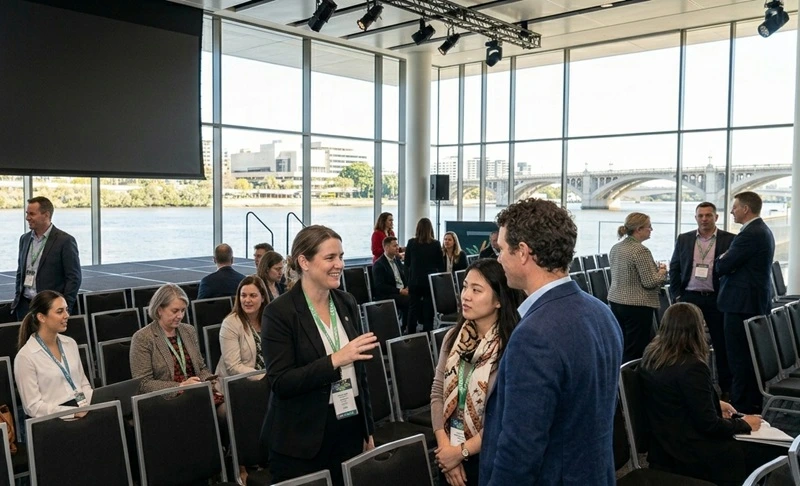
The event will also create opportunities for networking and broader industry discussion around the future of workforce strategy within vocational education.
Explore Smarter Workforce Strategies for RTO Growth
Sustainable growth in the RTO sector requires more than additional hiring. It requires intentional workforce design.
As operational complexity continues to increase, more organisations recognise that scalable growth depends on how teams structure, support, and align work across the business.
Explore how PeoplePartners helps RTOs scale through smarter workforce re-engineering strategies designed to improve operational efficiency and long-term scalability.
