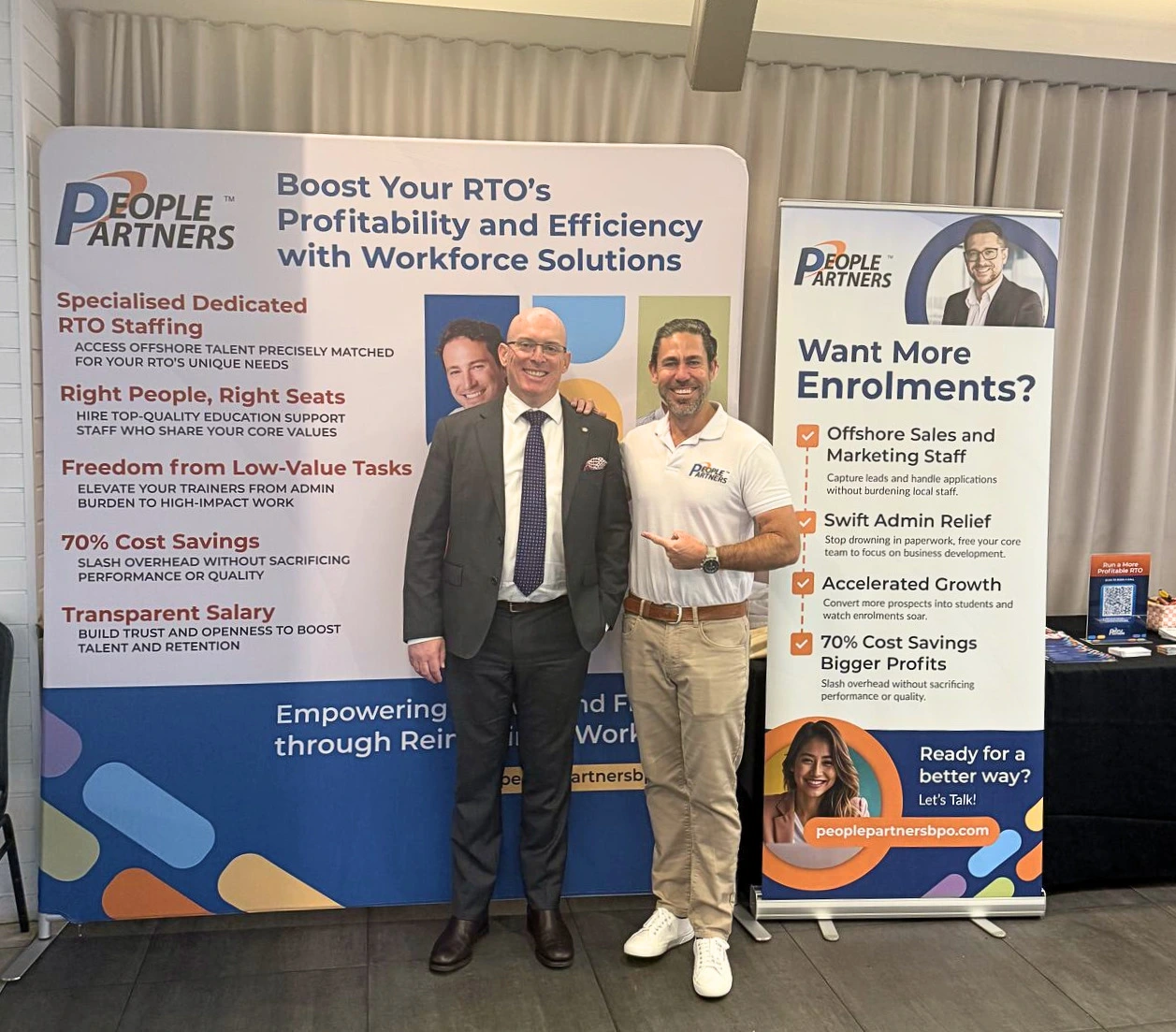
At the ITECA RTO Business Summit Melbourne 2026, Anthony Rice’s session challenged a familiar instinct in the sector: when growth stalls or pressure builds, most organisations respond by adding more people.
His argument was direct, and difficult to ignore. The issue isn’t capacity. It’s design.
Growth Is Breaking in Less Obvious Ways
One of the clearest insights from the session was how growth-related strain actually shows up inside RTOs. Not through lack of demand, but through internal friction.
As organisations scale, complexity compounds faster than revenue. Margins tighten even as top-line numbers improve. Key individuals become bottlenecks. Roles expand beyond what they were designed to handle.
The result is a business that looks like it’s growing, but feels increasingly harder to run. This reframes a common assumption: growth problems are often misdiagnosed as resourcing gaps, when they are actually structural issues.
The Hidden Flaw Behind Common “Fixes”
Rice broke down four typical responses leaders rely on:
- More discipline
- More delegation
- More technology
- More hiring
All of them share the same underlying assumption: that the structure itself is sound. That assumption is where things start to fail.
Delegation, for example, only works if the role being delegated is clearly defined and manageable. Technology only scales efficiency if workflows are already structured. Hiring only adds value if responsibilities are properly segmented. Otherwise, these solutions amplify inefficiency instead of resolving it.
For a deeper look at how this plays out in RTO environments, explore our breakdown of RTO workforce management challenges
When Roles Become the Problem
A major theme throughout the session was the idea that many roles inside RTOs have become “too wide to work.”
Instead of being focused and repeatable, roles accumulate layers of responsibility over time, often combining compliance, coordination, support, and operational tasks into a single seat.
This leads to:
- Constant context switching
- Higher error rates
- Slower execution
- Increased burnout
Rice’s framing was simple: when the role is wrong, no amount of optimisation inside it will fix the problem. This shifts the focus away from individual performance and toward structural clarity.
From Duplication to Segmentation
One of the most practical frameworks introduced during the talk was the shift from duplication to segmentation.
In many organisations, growth leads to duplication:
- Another generalist is hired
- Another coordinator is added
- Another assistant is layered in
This increases headcount, but not clarity.
Segmentation, on the other hand, breaks work into aligned task clusters—creating narrower, more specialised roles that are easier to train, manage, and scale. If you want to see how this applies in practice, read our guide to workforce re-engineering for RTOs.
Why Delegation Often Fails
A critical insight from the session: delegation is not a scaling strategy on its own.
Without redesigning roles, delegation simply redistributes chaos.
Leaders often attempt to “free themselves up” by passing tasks down, but if those tasks come from an already misaligned structure, they remain inefficient regardless of who performs them. This explains why many teams feel busy but not productive. The system itself hasn’t changed, only the person doing the work.
The Economics of Better Design

Beyond operational clarity, Rice also tied workforce design directly to financial performance.
He demonstrated how redesigning execution layers—combined with global talent and AI—can significantly reduce labour cost as a percentage of revenue while increasing margins.
The takeaway was not just about cost reduction. It was about decoupling growth from headcount. When roles are properly structured:
- Work becomes more predictable
- Output scales more efficiently
- Margin improves without constant hiring
Learn how this model works through RTO outsourcing solutions designed for scalable growth.
A Shift Toward Design-First Thinking
The most important shift from the session was conceptual.
From:
- “Who do we need to hire next?”
To:
- “How should this work actually be structured?”
This design-first mindset forces organisations to examine:
- Where responsibilities sit
- How workflows move
- Which roles are misaligned
- Where complexity is being created
It replaces reactive decision-making with intentional structure.
What This Means for RTO Leaders

The implications are immediate. RTOs are operating in an environment where efficiency, responsiveness, and scalability are becoming just as important as compliance.
Continuing to scale through hiring alone introduces:
- More complexity
- Higher costs
- Slower execution
Whereas redesigning roles creates:
- Clearer accountability
- Better use of talent
- Stronger operational leverage
As highlighted during the session, delaying this shift has a cumulative effect: businesses become less competitive over time, even if the impact is not immediately visible. Anthony Rice’s session did not focus on new tools or tactics. It focused on a more fundamental question:
Are you optimising the right thing?
For many RTOs, the answer is no. Not because of poor execution, but because the structure itself has not evolved with the demands of growth. The organisations that address this first will not just grow faster. They will grow with far less friction.
Ready to Optimise the Right Thing?
If your RTO is still scaling through hiring alone, it may be time to rethink how your organisation is designed to perform.
At PeoplePartners, we work with RTO leaders to redesign workforce structures so the right work sits in the right roles, and growth no longer depends on adding headcount.
Explore our RTO outsourcing solutions or speak with one of our Partnership Consultants to see how a design-first approach can unlock efficiency, reduce costs, and support long-term growth.
Frequently Asked Questions (FAQs)
1What is workforce re-engineering for RTOs?Workforce re-engineering for RTOs means redesigning how training, compliance, and student support functions are structured. Instead of trainers and senior staff handling everything—from delivery to AVETMISS reporting and student queries—responsibilities are separated into clearly defined roles. This ensures trainers focus on training outcomes, while admin, compliance, and support functions are handled by dedicated specialists.
2Why doesn’t hiring more trainers or admin staff solve RTO growth challenges?Because the issue is rarely just capacity: it’s role overload. In many RTOs, trainers are still managing enrolments, compliance documentation, and student support. Adding more people into the same unclear structure only increases handovers, duplication, and compliance risk. Without fixing role clarity, hiring simply scales inefficiency.
3How does workforce design impact profitability in an RTO?Workforce design directly affects how much of your revenue is consumed by labour. When high-cost roles like trainers spend time on admin or coordination tasks, productivity drops and margins tighten. By reallocating these tasks to lower-cost, specialised roles (including offshore support where appropriate), RTOs can improve trainer utilisation, reduce labour cost ratios, and increase overall profitability.
4What does duplication vs. segmentation look like in an RTO setup?Duplication happens when RTOs respond to growth by adding more generalist roles: for example, hiring another admin who handles enrolments, compliance, scheduling, and student queries all at once.
Segmentation, on the other hand, breaks these into focused roles such as:
- Compliance & Audit Coordinator (AVETMISS, audits)
- Enrolment Officer (processing and onboarding)
- Scheduler (trainer and class coordination)
- Student Support Officer (learner communication)
This makes each role easier to manage, train, and scale.
5How can RTOs start improving their workforce structure?Start by mapping out all operational tasks across training delivery, compliance, and student support. Then identify where high-value roles (like trainers or managers) are doing low-value or repetitive work. From there, restructure roles around clear task clusters and introduce support functions where needed. Many RTOs begin by offloading admin-heavy tasks such as documentation, LMS management, and student communication to dedicated support roles to immediately improve efficiency.
